
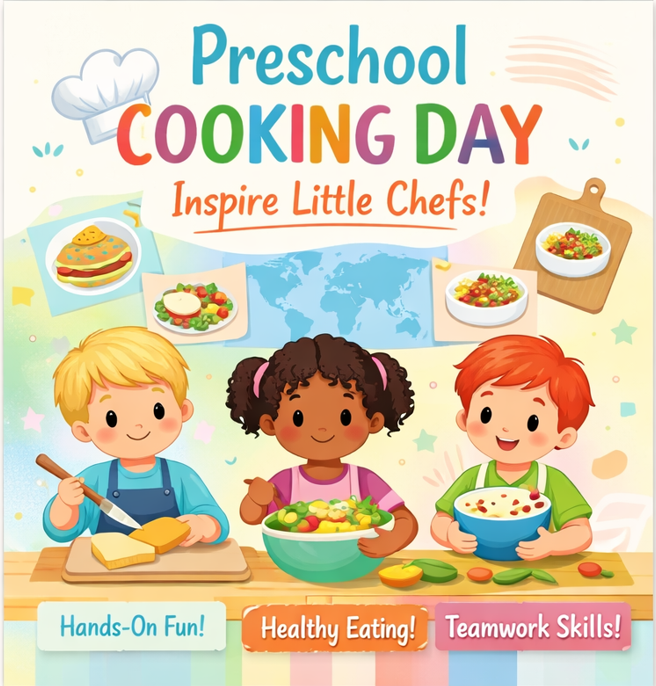
Cooking with toddlers is one of the most exciting activities in a preschool classroom. “Preschool Cooking Day” in preschool gives the kids the opportunity to try different foods, learn about healthy eating habits, develop hidden skills, and work together as a team.
We aren’t trying to find the next Michelin-star chef here. The reason for “Inspire Little Chefs” is just to get them curious. This preschool cooking day article, “Cooking Day – Inspire Little Chefs,” is designed to give kids a memorable day of their life.
This activity also improves teamwork, communication skills, and independence, making it an excellent addition to any early childhood education program.
Grade Level: Preschool
Theme: Cooking Day
Duration: 1 hour
Topic: Preparing Simple Dishes from Different Cuisines
What Our Little Chefs Will Actually Do:
As teachers, what is actualy want today isn’t just making a snack; it’s about letting the kids get comfortable with the building blocks of their food. We want them to really see and feel the ingredients, the fuzzy skin of a peach, the smell of fresh mint, or the way bread feels before it’s toasted. It’s their first step to learn how to cook.
As we go, they’ll be practicing the “how-to” of following a sequence. Watching a demo and then trying to replicate it—first the spread, then the topping—is actually a huge workout for their little brains. Plus, using those tiny spreaders and pinching herbs is the best way to prep their hands for holding a pencil later on.
Most importantly, we’re turning the kitchen into a tiny community. They’ll have to figure out how to share the big bowl, wait for their turn with the spoon, and realize that things just go smoother when they work together. We’re aiming to show them that “healthy” isn’t a chore, it’s colorful, it’s crunchy, and it’s something they can be proud of making themselves.
Why Cooking Activities Are Important?
Cooking is not just preparing food; it is a powerful learning path that helps several areas of early childhood development.
Sensory Experience
Cooking is an experience for all five senses. Kids can smell herbs, feel different textures of ingredients, see the different colors, and taste the final dish. This sensory engagement enhances cognitive development.
Language Development
Teachers can teach new vocabulary words, such as:
- Ingredients
- Recipe
- Mix
- Spread
- Chop
Discussing food also helps children to describe flavors and textures.
Math Skills
Do you think cooking activities introduce basic math concepts? The answer is yes:
- Counting ingredients
- Measuring quantities
- Recognizing shapes and sizes
For example, children can count slices of bread and fruit pieces.
Social Skills
When kids cook together, it helps to improve collaboration, communication, and tolerance.
Children learn to:
- Wait for their turn
- Share tools
- Work as a team
These social interactions help build interpersonal skills.
Materials Required
To do this preschool cooking activity successfully, teachers should prepare the following materials in advance.
Ingredients
Simple ingredients suitable for preschool cooking may include:
- Bread
- Butter or spread
- Cheese slices
- Vegetables (cucumber, tomato, lettuce)
- Fruits (banana, apple, grapes)
- Cooked rice
- Herbs or mild seasonings
Teachers should choose ingredients that are safe, soft, and easy to handle.
Utensils
Child-friendly kitchen tools should be provided:
- Mixing bowls
- Plastic knives
- Spoons
- Cutting boards
- Plates
These tools must be safe and appropriate for kids.
Safety Equipment
To maintain hygiene and safety, the following items should be used:
- Aprons
- Disposable gloves
- Wet wipes or tissues
- Hand sanitizer
Teaching Materials
Teachers may also prepare visual learning aids such as:
- Pictures of dishes from different cultures
- Flashcards showing ingredients
- A step-by-step recipe chart
Visual materials help children understand the process more easily.
Classroom Preparation
Before the activity begins, the classroom should be arranged in a way that supports smooth participation.
Preparation Tips
- Divide children into small groups
- Arrange cooking stations with ingredients and utensils
- Ensure children wash their hands before starting
- Explain safety rules clearly
Teachers should also check for any food allergies among students before selecting ingredients.
Lesson Procedure
Introduction (10 minutes)
The lesson starts with a short and engaging discussion about food and cooking.
The teacher can start by asking simple questions such as:
- What foods do you like to eat?
- Have you ever helped your parents cook at home?
- What is your favorite fruit or vegetable?
This conversation helps children feel comfortable and excited about the activity.
Exploring Different Cuisines
The teacher will then show pictures of dishes from different cultures. For example:
- Sandwiches
- Fruit salads
- Rice bowls
Children will observe the pictures and talk about what ingredients they see.
Introducing Ingredients
Next, the teacher presents the ingredients and utensils that will be used.
Each item is shown and named:
- Bread
- Butter
- Cheese
- Fruits
- Vegetables
Children are encouraged to identify items they recognize.
This stage helps build vocabulary and curiosity about food.
Main Activity (40 minutes)
- Step 1: Demonstration by the Teacher
The teacher shows the process of preparing a simple dish while explaining each step clearly.
For example, a sandwich preparation may be shown using simple instructions in passive voice.
Examples:
- “Bread is taken and placed on the cutting board.”
- “Butter is spread over the bread.”
- “Vegetables are chopped and placed on top.”
- “Cheese is added to the sandwich.”
Children carefully watch the process and ask questions.
This demonstration allows children to understand the steps before attempting them.
Children will then be taken through the same steps under supervision.
2. Step 2: Group Cooking Activity
After the demonstration, children will be divided into small groups.
Each group will prepare a simple dish such as:
- Vegetable sandwich
- Fruit salad
- Rice bowl with herbs and vegetables
Teachers and assistants will supervise and guide the children during the process.
Example Instructions for Fruit Salad
Children follow a simple recipe chart.
Steps may include:
- Wash the fruits.
- Peel bananas or oranges.
- Chop fruits into small pieces.
- Mix the fruits in a bowl.
- Serve the fruit salad in small cups.
Example Instructions for Rice Bowl
- Take a small portion of cooked rice.
- Add chopped vegetables.
- Sprinkle herbs.
- Mix gently with a spoon.
These simple steps help children understand the idea of following a recipe.
3. Group Discussion
Once the dishes are prepared, children gather together to share their experiences.
The teacher may ask questions such as:
- What did you enjoy most about cooking?
- Which ingredient did you like the best?
- What did your group prepare?
Children proudly show their dishes and talk about the process.
This discussion encourages communication and confidence.
Clean-up Time (10 minutes)
Cleaning up is an important part of the cooking activity.
Children should learn that maintaining a clean environment is essential in cooking.
Clean-Up Activities
- Wiping tables with cloths
- Returning utensils to trays
- Throwing waste in the bin
- Removing gloves and aprons
Teachers guide children through these tasks while emphasizing hygiene and responsibility.
This step reinforces good habits and teamwork.
Assessment
Assessment Methods
The teacher evaluates the activity through observation rather than formal testing.
Assessment Criteria
- Participation
Did the child actively participate in the cooking activity? - Ingredient Recognition
Can the child identify common ingredients? - Following Instructions
Did the child follow the step-by-step process? - Teamwork
Did the child cooperate with classmates?
These observations help teachers understand how children learn during hands-on activities.
Safety Tips for Preschool Cooking Day
Safety must always be a priority during cooking activities.
Important Safety Rules
- Always supervise children closely.
- Use plastic knives instead of sharp knives.
- Avoid hot cooking equipment.
- Ensure all ingredients are washed and safe to eat.
- Check for food allergies beforehand.
By following these safety precautions, cooking activities can be enjoyable and risk-free.
Cooking Story Time
The following week, teachers can organize a Cooking-Themed Story Time.
Books about food and cooking are read to the children. During the storytelling session, children may act out cooking actions such as mixing, stirring, or serving food.
Mini demonstrations can also be included to connect stories with real cooking experiences.
This approach combines literacy development with hands-on learning.
